
What Is MBDBT (Mindfulness-Based Dialectical Behavioural Therapy)? A Complete Guide
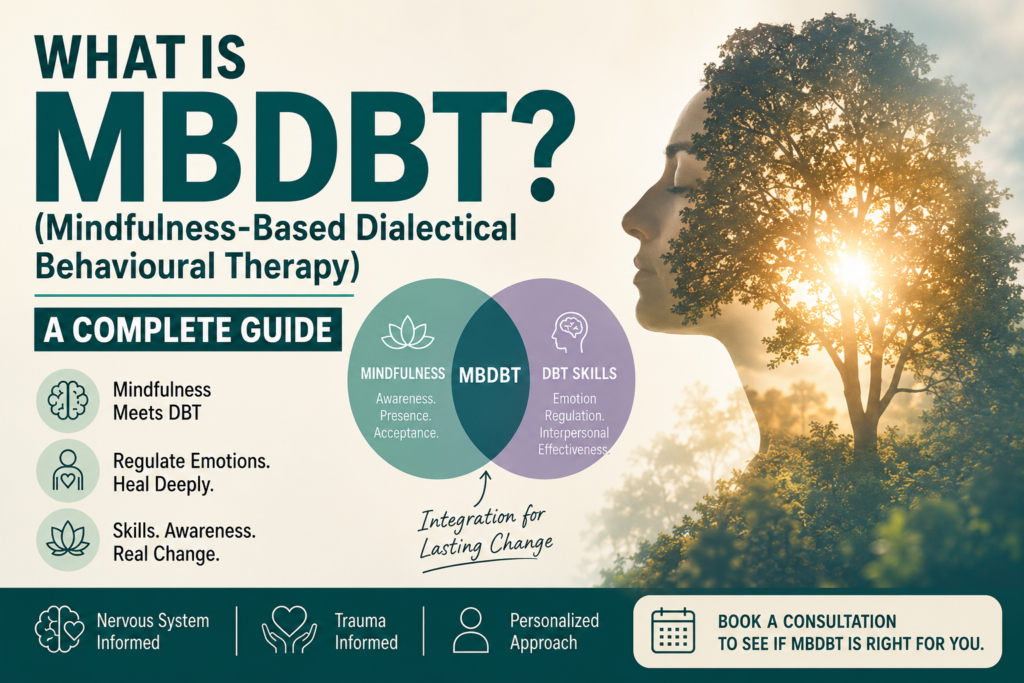
If you’ve come across the term MBDBT and aren’t quite sure what it means, you’re not alone. It’s a specific, integrative approach developed by Dr. Syeda Arifa Tasneem, and it’s not something you’ll find described anywhere else. This guide breaks down exactly what it is, how it differs from standard DBT, and who tends to benefit most from it.
The Problem Traditional DBT Doesn’t Fully Solve
Dialectical Behavioural Therapy (DBT) was originally developed by psychologist Marsha Linehan in the late 1980s to treat chronic emotional dysregulation, and it remains one of the most well-researched approaches for helping people manage intense emotions, self-destructive patterns, and unstable relationships. DBT works, but it was designed as a fairly structured, skills-based program, often delivered in a rigid weekly format with homework sheets and diary cards.
In real clinical practice, many people don’t just need better coping skills. They need to feel safe in their own body again, to slow down a nervous system that’s been on high alert for years, and to understand the emotional patterns underneath the behaviour, not just manage the behaviour itself. That’s the gap MBDBT was built to close.
What Makes MBDBT Different
MBDBT, or Mindfulness-Based Dialectical Behavioural Therapy, combines the practical, skills-based structure of DBT with a deeper, ongoing mindfulness practice and a nervous-system-aware, trauma-informed lens. Rather than treating mindfulness as one module among many, MBDBT treats it as the foundation everything else is built on.
The Mindfulness Component
In MBDBT, mindfulness isn’t a single session on breathing exercises. It’s woven through every part of the work. The goal is to help you build a real, moment-to-moment awareness of what’s happening in your body and mind before a reaction takes over, rather than only learning to manage a reaction after it’s already happened.
The Dialectical Behaviour Therapy Component
The DBT foundation stays intact: emotion regulation, interpersonal effectiveness, and mindfulness. These three skill areas remain central, but they’re taught and practiced through an integrated, more embodied lens rather than as standalone worksheets.
Who Is MBDBT For?
Emotional Dysregulation
If small triggers regularly lead to emotional reactions that feel disproportionate to the situation, and you find yourself regretting things said or done in the heat of the moment, this is often the starting point for MBDBT work.
Trauma and Nervous System Dysregulation
People who feel like their body is permanently braced for danger, even in objectively safe situations, often respond well to the nervous-system-focused elements of MBDBT, which go beyond talk therapy alone.
Relationship and Attachment Patterns
Repeating relationship patterns, such as pulling people close and then pushing them away, difficulty trusting, or a persistent fear of abandonment, are frequently rooted in attachment wounds that DBT skills alone don’t fully address. MBDBT’s mindfulness foundation helps people notice these patterns as they’re happening, not just after the fact.
What a Typical MBDBT Session Looks Like
Sessions typically begin with a brief grounding or mindfulness check-in, followed by a review of the week’s patterns: what came up, what triggered it, and how the body responded. From there, the session moves into skill-building relevant to what’s most alive for the client that week, whether that’s distress tolerance during a specific conflict, or working through a trauma response that got activated. Sessions are collaborative rather than lecture-style, and pacing is adjusted to the individual rather than following a fixed weekly curriculum.
MBDBT vs Traditional DBT vs CBT: Key Differences
CBT focuses primarily on identifying and restructuring unhelpful thought patterns.
Traditional DBT adds structured skills training for emotion regulation, distress tolerance, and interpersonal effectiveness, often in a group format.
MBDBT integrates DBT’s skills foundation with continuous mindfulness and somatic practice and a trauma-informed, nervous-system-aware approach, delivered individually and paced to the client rather than a fixed curriculum.
Is MBDBT Right for You?
MBDBT tends to be a good fit if you’ve tried talk therapy before and felt like you understood your patterns intellectually but still couldn’t change them in the moment; if you experience intense emotional swings; or if past trauma still shows up in your body even when your mind has processed it. A licensed clinician can help you determine whether this approach, or another one, is the right starting point for your specific situation.
Frequently Asked Questions
Is MBDBT a recognized therapy modality?
MBDBT is an integrative approach developed by Dr. Syeda Arifa Tasneem, combining two well-established, evidence-based foundations: mindfulness and somatic practices, and Dialectical Behaviour Therapy. It is not a separate licensing category, but a structured patented clinical approach delivered by a qualified psychologist.
How is MBDBT different from regular DBT?
Regular DBT typically follows a structured weekly curriculum with modules and homework. MBDBT integrates the same core skills but centers mindfulness and somatic practices as an ongoing practice throughout, and adapts pacing to the client rather than following a fixed program.
How many sessions does MBDBT typically take?
This varies significantly by individual and the issues being addressed. Some people notice shifts within the first several sessions, while deeper trauma or long-standing relational patterns typically take longer. Your clinician will discuss a realistic timeline during your initial consultation.
Can MBDBT be done online?
Yes. Many of the mindfulness and skills-based components of MBDBT translate well to online sessions, making it accessible for clients who cannot attend in person.
Who created MBDBT?
MBDBT was developed by Dr. Syeda Arifa Tasneem, Clinical Psychologist and Founder-Director of UNSAD Health, drawing on her clinical experience integrating psychology, neurobiology, and mindfulness-based practice.
Recognize these patterns in yourself? Book a consultation with UNSAD Health to find out if MBDBT is the right approach for you.