
Is Your Nervous System Stuck on “High Alert”?
By Dr. Syeda Arifa Tasneem, Ph.D. | Clinical Psychologist and Founder, UNSAD Health | April 2026 | 8 min read
Written and medically reviewed by a qualified clinical psychologist with 15 years of experience in integrative mental healthcare.
Nervous system dysregulation treatment is one of the most in-demand and least understood areas of mental healthcare today. If you have ever felt exhausted but wired at the same time, or found yourself walking through a fog unable to focus or feel joy, your nervous system may be stuck in a chronic survival state. And the good news is that this is treatable.
At UNSAD Health in Koramangala, Bangalore, we work with clients experiencing nervous system dysregulation every day, including clients across India, Australia, the UK, the US, Canada, the Middle East, Singapore, and the Maldives. What we consistently find is this: your symptoms are not the problem. They are the language of a dysregulated nervous system trying to protect you. When your body’s internal thermostat is stuck, it stops responding to the present moment and starts reacting to past stress.
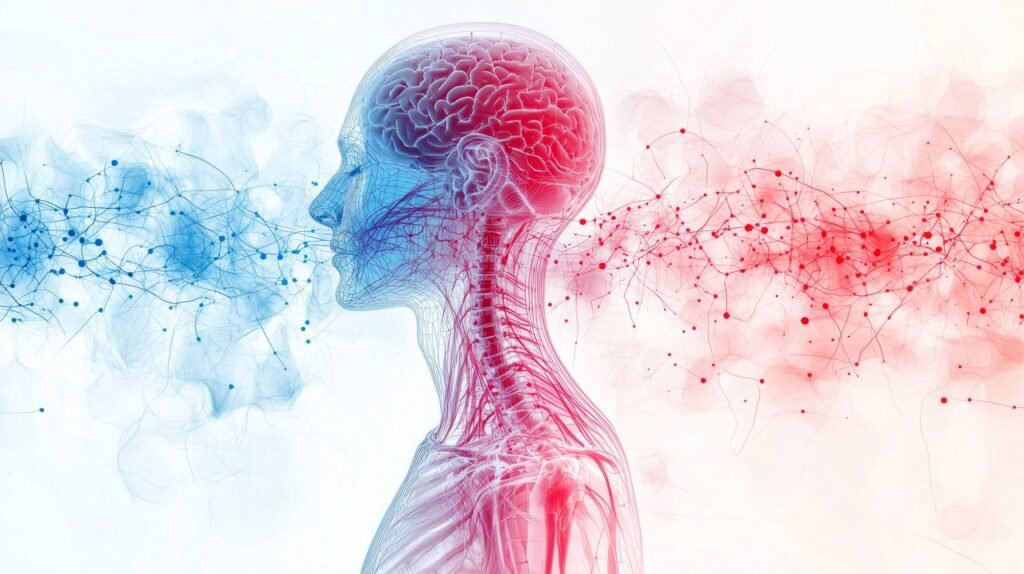
What Is Nervous System Dysregulation?
Nervous system dysregulation occurs when the autonomic nervous system loses its ability to flexibly move between states of activation and rest. Instead of responding appropriately to the actual demands of the present moment, a dysregulated nervous system stays locked in survival mode, chronically scanning for threat even when no real danger exists.
This is not a personality flaw or a sign of weakness. It is a physiological adaptation, often rooted in prolonged stress, unresolved trauma, childhood adversity, or chronic overwork. Nervous system dysregulation treatment addresses the root cause of this stuck pattern rather than simply managing the symptoms.
The Science: The Three States of the Vagus Nerve
Our nervous system operates on a hierarchy described by Dr. Stephen Porges’ Polyvagal Theory, one of the most important frameworks in modern trauma and nervous system science. According to this model, we move between three primary states:
- Social Engagement (Regulated): We feel safe, connected, curious, and calm. This is the optimal state for learning, relating, and healing.
- Hyper-Arousal, Fight or Flight: The body perceives an immediate threat. You feel anxious, panicked, irritable, or on edge. Heart rate increases, muscles tighten, and the mind races.
- Hypo-Arousal, Freeze or Shutdown: The body perceives the threat as inescapable. You feel numb, disconnected, depressed, or physically heavy. Energy collapses and motivation disappears.
When nervous system dysregulation is present, a person becomes stuck in either hyper-arousal or hypo-arousal, or oscillates rapidly between the two, without the ability to return to the regulated social engagement state. Effective nervous system dysregulation treatment works directly with these physiological states, not just with thoughts and behaviours.
The Signs: How Nervous System Dysregulation Speaks to You
Nervous system dysregulation does not stay in your head. It migrates into your organs, muscles, sleep cycles, and relationships. Many people seek treatment for the individual symptoms without realising they share a common root in nervous system dysregulation. Common signs include:
- Digestive Chaos: Chronic bloating, IBS, or persistent nausea that has no clear medical explanation.
- Sleep Fragility: Tossing and turning, difficulty falling asleep, or waking at 3am with a racing heart.
- Chronic Physical Tension: Persistent tightness in the jaw, neck, shoulders, or chest that does not resolve with massage or rest.
- Emotional Volatility: Being triggered by minor inconveniences in ways that feel disproportionate and difficult to control.
- Sensory Overload: Feeling overwhelmed by bright lights, crowds, noise, or too much stimulation.
- Exhaustion That Sleep Does Not Fix: Waking up tired regardless of how many hours you slept.
- Emotional Numbness: Feeling disconnected from yourself, others, or activities that previously brought joy.
- Hypervigilance: Constantly scanning for danger, difficulty relaxing even in safe environments.
If several of these resonate, nervous system dysregulation treatment from a qualified integrative psychologist can make a significant and lasting difference to your quality of life.
What Causes Nervous System Dysregulation?
Understanding the root cause of nervous system dysregulation is central to effective treatment. Common causes include:
- Unresolved trauma, including childhood adversity, attachment wounds, or single-incident trauma
- Chronic workplace stress and burnout, particularly common among Bangalore’s IT and corporate workforce
- Prolonged anxiety or depression that has not received adequate clinical treatment
- Adverse childhood experiences (ACEs) that wired the nervous system for threat detection early in life
- Chronic pain or illness that keeps the body in a persistent state of physiological stress
- Relationship conflict, loneliness, or prolonged social stress
3 Evidence-Based Ways to Begin Regulating Your Nervous System Today
While comprehensive nervous system dysregulation treatment requires clinical support, these somatic tools can begin to create physiological shifts immediately. They work by directly signalling safety to the nervous system through the body rather than through cognitive reassurance alone.
1. The Physiological Sigh
Inhale deeply through the nose, then take a second small sip of air at the very top of the inhale, and then exhale slowly and completely through the mouth. Repeat three times. Research from Stanford University shows this is the fastest known way to reduce physiological stress in real time, working faster than any other breathing technique.
2. The Orientation Exercise
Slowly look around the room and deliberately notice five things you can see, four you can physically touch, three you can hear, two you can smell, and one you can taste. Moving your eyes slowly and intentionally signals to your brainstem that there is no immediate threat in your physical environment, activating the social engagement system and reducing hyper-arousal.
3. Humming or Vocalization
Gently hum a single note for 10 to 20 seconds. The vagus nerve runs through the vocal cords, and gentle humming creates direct vibration along the vagal pathway, stimulating the parasympathetic nervous system and moving the body toward regulation. This is one of the simplest and most immediately accessible nervous system regulation tools available.
These tools are entry points, not substitutes for clinical nervous system dysregulation treatment. They work best as part of a structured therapeutic program that addresses the underlying drivers of dysregulation.
How UNSAD Health Treats Nervous System Dysregulation
At UNSAD Health in Koramangala, Bangalore, nervous system dysregulation treatment is approached integratively, addressing the physiological, psychological, and relational dimensions simultaneously. Treatment draws on:
- MBDBT (Mindfulness-Based Dialectical Behavior Therapy): Dr. Tasneem’s proprietary framework integrates neurobiological mindfulness with somatic awareness to build genuine regulation capacity from the inside out.
- Brainspotting: A subcortical processing approach that accesses and releases trauma held below the level of conscious awareness, directly resetting nervous system baseline.
- Somatic Therapy: Body-based interventions that work with breath, movement, posture, and physical sensation to restore nervous system flexibility.
- EFT (Emotional Freedom Technique): Tapping-based somatic intervention that reduces the physiological charge associated with stress, trauma, and anxiety.
- Functional Medicine Integration: Addressing nutritional, hormonal, and gut-brain axis factors that contribute to nervous system dysregulation at the biological level.
Sessions are available in person at our Koramangala clinic and online for clients across India, Australia, the UK, the US, Canada, the Middle East, Singapore, the Maldives, and Europe.
Frequently Asked Questions
Can nervous system dysregulation be treated permanently? Yes. With the right integrative approach, the nervous system can genuinely rewire through a process called neuroplasticity. This is not about managing symptoms indefinitely. It is about restoring the nervous system’s natural capacity for regulation so that it responds flexibly to life rather than reactively to past stress. Most clients at UNSAD Health begin experiencing meaningful shifts within 8 to 12 sessions of targeted nervous system dysregulation treatment.
Is nervous system dysregulation the same as anxiety? They are related but not identical. Anxiety is often a symptom of nervous system dysregulation, specifically the hyper-arousal state. But nervous system dysregulation can also manifest as depression, numbness, chronic fatigue, and physical symptoms with no clear medical cause. Treating the nervous system directly rather than just the anxiety produces more comprehensive and lasting results.
How do I know if I need professional nervous system dysregulation treatment? If you recognise several of the signs listed in this article and they have been present for more than a few weeks, or if self-help tools provide only temporary relief, professional support is the next step. At UNSAD Health we offer a free 15-minute introductory call to help you understand whether clinical treatment is the right fit for your situation.
Is online therapy effective for nervous system dysregulation? Yes. Somatic and nervous system-focused therapy translates very effectively to the online format. Many clients at UNSAD Health receive nervous system dysregulation treatment entirely online, including clients in Australia, the UK, the US, Canada, the Middle East, and Singapore, with outcomes equivalent to in-person sessions.
Your Nervous System Is Not Broken. It Needs the Right Support.
Your nervous system is not broken. It is trying to protect you using strategies that made sense at some point in your life. Nervous system dysregulation treatment is the process of teaching it, gently and systematically, that the danger has passed and that safety is now available.
If you are ready to begin that process, UNSAD Health is here to support you, whether you are in Koramangala, anywhere across India, or on the other side of the world.
Book a Consultation: WhatsApp: +91 97400 42995 | Email: connect@unsadhealth.com
UNSAD Health, Koramangala, Bangalore | unsadhealth.com
Free 15-minute introductory call available. Online sessions accessible across India, Australia, the UK, the US, Canada, the Middle East, Singapore, the Maldives, and Europe.
About the Author
Dr. Syeda Arifa Tasneem, Ph.D. Founder and Clinical Director, UNSAD Health | Creator of MBDBT
With over 15 years of clinical and research experience, Dr. Tasneem is a pioneer in integrative clinical psychology and corporate mental wellness in India. She is the creator of Mindfulness-Based Dialectical Behavior Therapy (MBDBT), a certified Mindfulness Coach, Hypnotherapist (California Hypnosis Institute, USA), and Group Life Coach. Former Consultant Psychologist at Apollo Spectra. Panelist at the Asia Pacific HRM Congress and international mental health forums.
Qualifications: Ph.D. Clinical Psychology, M.Phil., M.Sc. Psychology, P.G.D.R.P.
Related Articles:
- Trauma Therapist in Bangalore: Your Complete Guide to Integrative Trauma Therapy
- Anxiety, Depression and Burnout in Bangalore: When It Is More Than Just Stress
- How to Heal Childhood Trauma: A Neuro-Somatic Approach
- Why Do I Feel Anxious for No Reason?
This article is written for educational purposes by a qualified clinical psychologist. It does not constitute a clinical diagnosis or replace professional mental health treatment.