
Couples Therapy and Relationship Counselling in Bangalore: When Love Is Not Enough on Its Own
By Dr. Syeda Arifa Tasneem, Ph.D. | Clinical Psychologist and Founder, UNSAD Health | June 2026 | 11 min read
Written and medically reviewed by a qualified clinical psychologist with 15 years of experience in integrative mental healthcare.
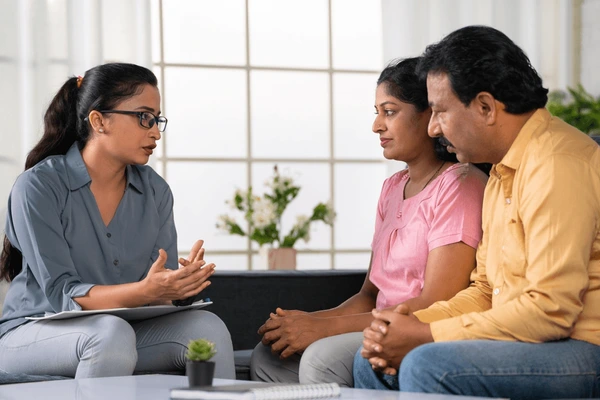
Every couple has a breaking point they never saw coming. Not a dramatic explosion, but a quiet moment when one or both partners realise that something fundamental has shifted. The conversations feel hollow. The distance feels permanent. The arguments circle the same ground over and over without resolution. And the person who once felt like home now feels like a stranger living under the same roof.
If this sounds familiar, you are not alone, and your relationship is not necessarily beyond repair. What you may be experiencing is not a failure of love. It is a failure of the tools available to you, and that is something a skilled couples therapist in Bangalore can help you address.
At UNSAD Health in Koramangala, Bangalore, we work with couples navigating some of the most painful and complex relational challenges imaginable. This guide will help you understand what relationship therapy actually involves, when to seek it, what to expect, and how integrative couples counselling differs from conventional approaches.
Why Couples in Bangalore Are Seeking Relationship Therapy
Relationships in modern Bangalore face pressures that previous generations simply did not encounter at the same intensity. Both partners are frequently working demanding jobs, managing long commutes, navigating financial stress, raising children with limited family support nearby, and doing all of this while being expected to be emotionally available, romantically connected, and communicatively skilled at home.
The result is that many couples in Bangalore are not failing because they do not love each other. They are failing because they are overwhelmed, under-resourced, and have never been taught how to navigate conflict, emotional vulnerability, or relational repair.
Add to this the particular pressures of Indian relationship dynamics, including family expectations, societal pressure around marriage, gender role tensions, and the unique stress of intercultural or inter-community relationships, and it becomes clear why relationship difficulties are among the most common presenting concerns we see at our Koramangala clinic.
We also work with couples online across India, Australia, the United Kingdom, the United States, Canada, the Middle East, Singapore, the Maldives, and Europe, where many Indian couples living abroad face the additional challenge of navigating relationship stress without the support of an extended family network.
Signs That Couples Therapy Could Help Your Relationship
Many couples wait far too long before seeking help. Research by relationship psychologist Dr. John Gottman suggests that the average couple waits six years after serious problems begin before seeking therapy. By that point, patterns of disconnection and hurt have often become deeply entrenched.
You do not need to be in crisis to benefit from couples therapy. Here are signs that working with a couples therapist in Bangalore could meaningfully strengthen your relationship:
- Communication has broken down Conversations escalate quickly into arguments. One or both partners shuts down or withdraws. Important topics are avoided entirely because bringing them up feels futile or dangerous.
- Emotional intimacy has faded You feel more like roommates or business partners than romantic partners. There is a persistent sense of loneliness even when you are together. Emotional vulnerability feels unsafe or pointless.
- The same arguments repeat without resolution You have the same fight over and over. The content changes but the dynamic does not. Nothing ever feels truly resolved, just temporarily abandoned.
- Trust has been broken An affair, emotional infidelity, financial dishonesty, or a significant betrayal has created a rupture that neither partner knows how to move through.
- Life transitions have created distance A new baby, a career change, relocation, loss, illness, or retirement has shifted the relational dynamic in ways that feel difficult to navigate together.
- Physical intimacy has significantly reduced or stopped Physical connection has become infrequent, disconnected, or a source of tension rather than closeness.
- One or both partners is considering separation The relationship is at a genuine crossroads and both partners want to make a considered, informed decision rather than one driven purely by pain.
- You want to build a stronger foundation proactively Some couples come to therapy not in crisis but because they want to invest in the quality and depth of their relationship before problems become entrenched.
What Couples Therapy at UNSAD Health Actually Involves
There is a significant difference between venting to a therapist who nods sympathetically and genuine, evidence-based couples therapy that creates lasting change. At UNSAD Health, relationship therapy is structured, purposeful, and grounded in the neuroscience of attachment and emotional regulation.
The First Session, Relational Assessment
The initial session is a comprehensive relational assessment. Dr. Tasneem or a senior therapist explores the history of the relationship, the specific presenting concerns, each partner’s attachment style and relational patterns, the family of origin dynamics that each person brings into the relationship, previous attempts at resolution, and the goals each partner holds for therapy.
This session is done together as a couple. In some cases, one or two individual sessions with each partner separately may be recommended to understand each person’s inner world more fully before proceeding with joint sessions.
Building a Shared Understanding
One of the most powerful early phases of couples therapy is helping both partners develop a shared understanding of what is actually happening in their relationship, not from a blame perspective but from a systemic one. Most couples are stuck in a cycle where each person sees the other as the problem. Therapy helps both partners step back and see the cycle itself as the problem.
When a couple can say together, “we get caught in this pattern,” rather than “you always do this to me,” the entire emotional landscape of the relationship shifts.
Active Therapeutic Work
The active phase of couples therapy at UNSAD Health draws on multiple evidence-based frameworks tailored to the specific needs of each couple:
Emotional Freedom Technique (EFT): A powerful somatic intervention that works with the body’s energy system to release the emotional charge held in recurring conflict patterns, attachment wounds, and relational stress. EFT helps couples regulate their nervous systems during and between sessions, creating the physiological calm needed for genuine emotional connection and productive communication.
Gottman Method Principles: Building on decades of relationship research, Gottman-informed therapy addresses the specific behaviours and interaction patterns that predict relational success or breakdown, including contempt, criticism, defensiveness, and stonewalling.
MBDBT for Couples: Dr. Tasneem’s proprietary Mindfulness-Based Dialectical Behavior Therapy framework is adapted for couples work to address emotional dysregulation within the relationship, helping both partners develop the distress tolerance and emotional awareness needed for productive, connective communication.
Attachment-Based Therapy: Understanding each partner’s attachment style, whether secure, anxious, avoidant, or disorganised, is fundamental to understanding why each person behaves as they do under relational stress. Attachment-informed work creates profound compassion between partners by revealing the vulnerability beneath defensive behaviour.
Somatic Awareness in Couples Work: The body holds relational patterns just as it holds individual trauma. Couples therapy at UNSAD Health incorporates somatic awareness, helping partners notice and work with the physical experience of emotional activation in real time during sessions.
Common Relationship Issues We Work With
At UNSAD Health, our couples therapists in Bangalore and online work with a wide range of relational challenges:
Communication and Conflict Recurring arguments, escalation patterns, inability to resolve disagreements, communication breakdown, and the frustration of feeling perpetually misunderstood.
Emotional Disconnection Feeling like strangers, loss of friendship within the relationship, emotional withdrawal, loneliness within the partnership, and the slow erosion of warmth over time.
Infidelity and Trust Repair Physical or emotional affairs, the discovery of significant deception, and the deeply complex process of deciding whether and how to rebuild trust after betrayal.
Attachment and Intimacy Issues Difficulty with emotional vulnerability, fear of abandonment, avoidant patterns, anxious attachment behaviours, and the cycle of pursuer and withdrawer that leaves both partners feeling alone.
Pre-Marital Counselling Many couples in Bangalore come to UNSAD Health before marriage to build a strong relational foundation, develop communication skills, navigate family expectations, and address any concerns before they become entrenched.
Intercultural and Inter-Community Relationships Relationships across different cultural, religious, or community backgrounds carry unique navigational challenges, including family pressure, value differences, and identity tensions.
Parenting Disagreements Conflict around parenting approaches, co-parenting after separation, and the relational strain that frequently emerges in the transition to parenthood.
Sexual and Physical Intimacy Mismatched desire, physical disconnection, intimacy avoidance, and conversations around sexuality that feel too uncomfortable to have without a skilled facilitator.
Separation and Conscious Uncoupling When a relationship is ending, therapy can support couples in navigating separation with dignity, clarity, and minimal harm, particularly when children are involved.
What Makes UNSAD Health Different for Couples Therapy in Bangalore
Genuinely integrative: Rather than applying a single therapeutic model to every couple, UNSAD Health draws on multiple evidence-based frameworks. The approach is customised to each couple’s specific dynamics, history, and goals.
Individual and relational: Where relevant, individual sessions run alongside couples sessions to address the personal history, trauma, or psychological patterns each partner brings into the relationship. This dual-track approach produces significantly deeper and more sustainable results.
Culturally informed: Dr. Tasneem and the UNSAD Health team have deep understanding of the specific relational pressures faced by Indian couples, including family system dynamics, societal expectations around marriage, gender roles, and the tension between individual needs and collective obligation.
Global reach: Couples therapy is available both in person at our Koramangala clinic and online for couples across India, Australia, the United Kingdom, the United States, Canada, the Middle East, Singapore, the Maldives, and Europe.
Created by MBDBT’s originator: Dr. Tasneem’s proprietary framework, MBDBT, offers couples tools for emotional regulation that are not available in standard couples therapy approaches anywhere else in Bangalore.
Frequently Asked Questions
Does couples therapy actually work? Yes, when conducted by a trained therapist using evidence-based methods. Research shows that approximately 70% of couples who engage in Emotionally Focused Therapy report significant improvement in relationship satisfaction. The key variables are both partners’ genuine willingness to engage and the skill of the therapist. Couples therapy works best when sought before patterns have become extremely entrenched, though we have seen meaningful change even in relationships that appeared to be at the point of no return.
What if my partner is reluctant to come to therapy? This is one of the most common situations we encounter. Often one partner is ready for therapy before the other. We recommend starting with an individual session to explore the concerns and build a case for couples work. Sometimes one partner attending individual therapy creates enough positive change in the relational dynamic that the other becomes willing. In other cases, a direct conversation with the reluctant partner about what therapy actually involves, not couples fighting in front of a stranger, but structured, supportive skill-building, is enough to open the door.
Is what we share in couples therapy confidential? Yes, with one important nuance. Everything shared in couples sessions is confidential between the couple and the therapist. If individual sessions are conducted alongside couples work, information shared individually is not automatically shared with the partner unless you explicitly consent to this. The boundaries of confidentiality are clearly explained during your first session.
How many sessions does couples therapy typically take? This depends on the complexity of the presenting issues and the goals of the couple. Pre-marital counselling and skill-building for relatively healthy couples may be complete within 8 to 12 sessions. Couples dealing with infidelity, significant trust rupture, or longstanding disconnection typically need 20 to 30 sessions over 6 to 9 months. A realistic roadmap is provided after the initial assessment.
Can we do couples therapy online? Yes. Online couples therapy at UNSAD Health is conducted on encrypted, secure platforms and is available to couples anywhere in India, Australia, the United Kingdom, the United States, Canada, the Middle East, Singapore, the Maldives, and Europe. Many couples find the online format actually reduces the barrier to engagement, particularly for busy professionals in Bangalore who find scheduling in-person sessions logistically challenging.
Do you offer pre-marital counselling in Bangalore? Yes. Pre-marital counselling is one of the most valuable and underutilised forms of couples therapy. It helps partners understand each other’s attachment styles, communication patterns, family of origin influences, values, and expectations before marriage, creating a much stronger relational foundation from the start.
What if we decide to separate during therapy? Couples therapy is not about keeping couples together at all costs. It is about helping partners make clear, conscious, and compassionate decisions about their relationship. If the outcome of therapy is a mutual decision to separate, the therapeutic process supports this transition in a way that minimises harm, preserves dignity, and, where children are involved, protects their wellbeing.
A Note to the Partner Reading This Alone
If you have found this page because you are worried about your relationship and your partner does not yet know you are looking, that is okay. Many people begin this journey alone. You do not need your partner’s buy-in to take the first step. Reaching out for a conversation with our team costs nothing and commits you to nothing. It simply opens a door.
And if your partner is the one who found this page, and you are the one who has been reluctant, consider this: seeking help for your relationship is not an admission of failure. It is one of the most courageous and loving things a person can do for someone they care about.
Begin Your Journey Toward a Healthier Relationship
You do not have to keep having the same argument. You do not have to keep feeling alone in your relationship. And you do not have to make irreversible decisions while you are in the middle of pain.
UNSAD Health’s couples therapists in Bangalore and online are here to help you find a new way forward together.
Book a Consultation: WhatsApp: +91 97400 42995 Email: connect@unsadhealth.com UNSAD Health, Koramangala, Bangalore unsadhealth.com
Free 15-minute introductory call available. In-person sessions in Koramangala, Bangalore. Online sessions available across India, Australia, the UK, the US, Canada, the Middle East, Singapore, the Maldives, and Europe.
About the Author
Dr. Syeda Arifa Tasneem, Ph.D. Founder and Clinical Director, UNSAD Health | Creator of MBDBT
With over 15 years of clinical and research experience, Dr. Tasneem is a pioneer in integrative clinical psychology and corporate mental wellness in India. She is the creator of Mindfulness-Based Dialectical Behavior Therapy (MBDBT), a certified Mindfulness Coach, Hypnotherapist (California Hypnosis Institute, USA), and Group Life Coach. Former Consultant Psychologist at Apollo Spectra. Panelist at the Asia Pacific HRM Congress and international mental health forums. Dr. Tasneem works with individuals and couples across India and internationally, including Australia, the UK, the US, Canada, the Middle East, Singapore, and the Maldives.
Qualifications: Ph.D. Clinical Psychology, M.Phil., M.Sc. Psychology, P.G.D.R.P.
Related Articles: